About this skill
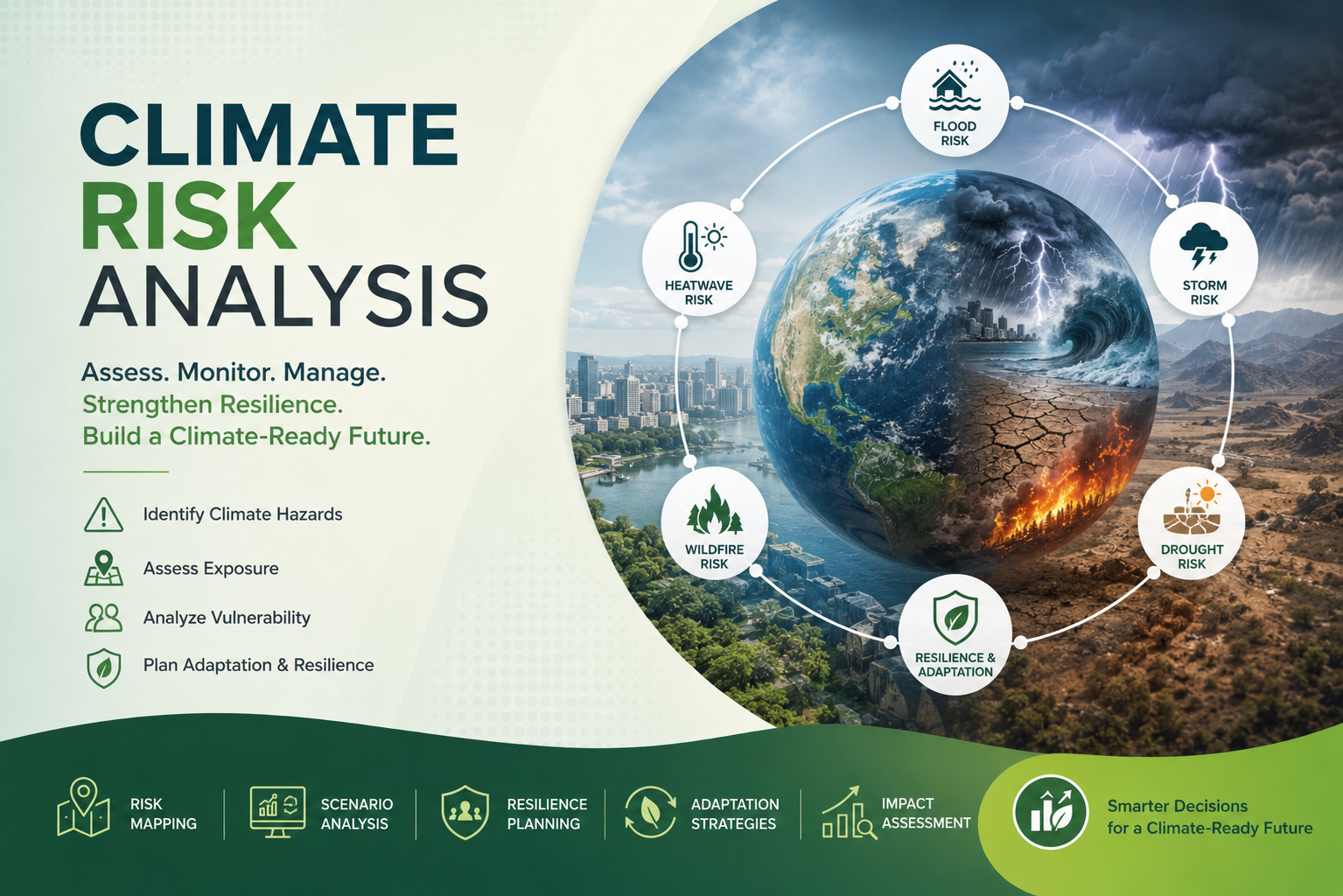
Climate Risk Analysis is the skill of identifying, assessing, and interpreting how climate change may affect organizations, assets, projects, supply chains, and communities. It focuses on risks such as extreme heat, floods, droughts, storms, sea-level rise, resource scarcity, and changing environmental conditions. In green careers, this skill helps organizations understand where they are vulnerable and how climate-related changes may influence operations, costs, safety, infrastructure, and long-term planning. This skill usually includes two main types of risk: physical risks and transition risks. Physical risks are direct impacts caused by climate events, such as damage to buildings from flooding or reduced agricultural productivity due to drought. Transition risks come from the shift toward a low-carbon economy, including new regulations, carbon pricing, changing market demand, technology changes, and investor expectations. A person with Climate Risk Analysis skills uses data, climate scenarios, maps, reports, and sector-specific indicators to evaluate these risks. Climate Risk Analysis is important for green jobs because it supports climate adaptation, ESG reporting, sustainability strategy, investment decisions, and resilience planning. Professionals with this skill can help companies reduce exposure to climate threats, prepare adaptation plans, improve infrastructure resilience, and align business strategies with climate-related regulations and net-zero goals. It is commonly used in roles such as Climate Risk Analyst, ESG Analyst, Sustainability Consultant, Environmental Planner, Resilience Officer, and Sustainable Finance Specialist.