Green Economy Skills

Skills that power the green economy

Discover the technical and soft skills most valued by sustainability-focused employers, training providers and green-career pathways.

0 Total skills
0 Technical
0 Soft
0 Categories

Analytical

4
Carbon Footprint Analysis cover image
Technical
Carbon Footprint Analysis
Analytical

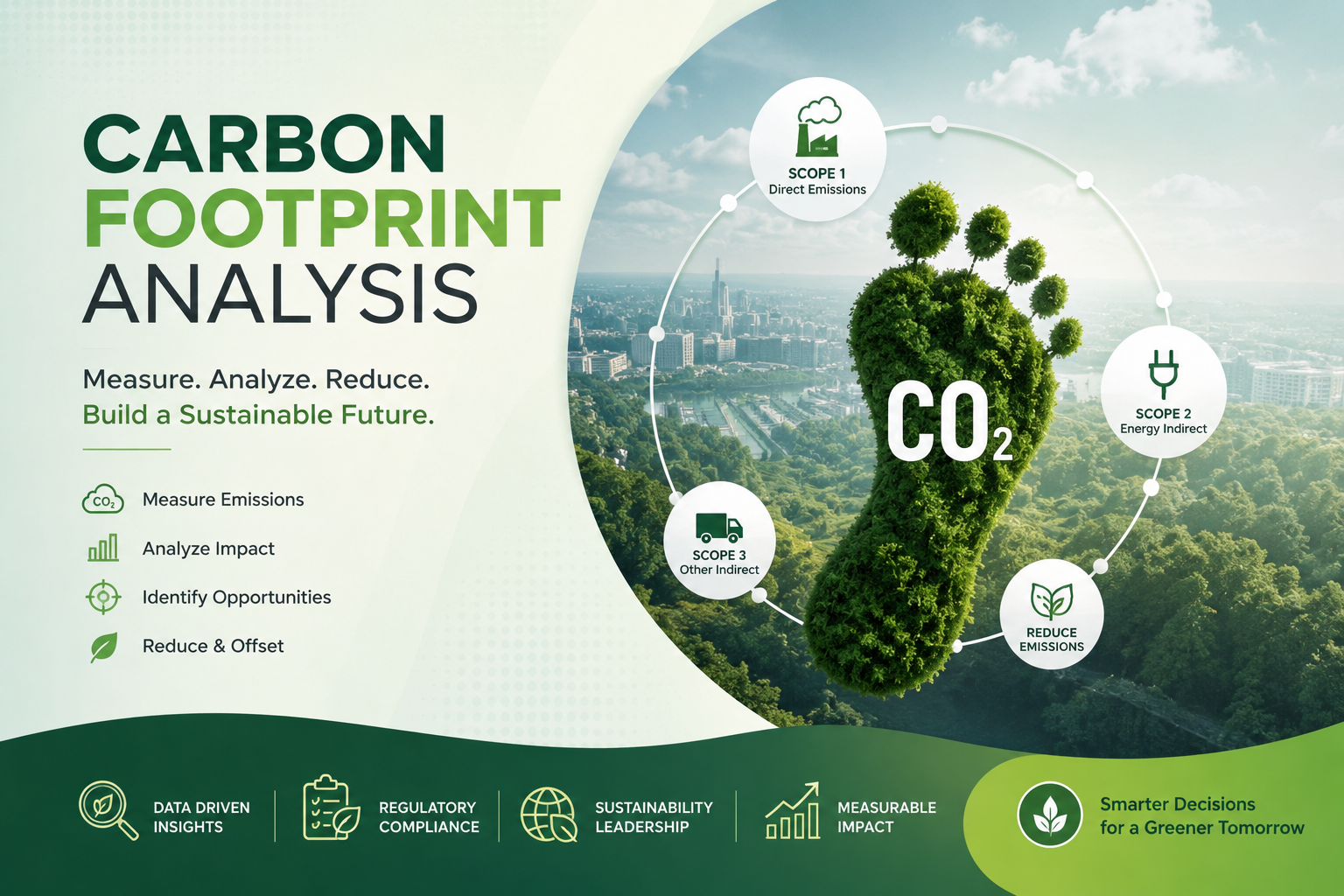
Carbon Footprint Analysis is the ability to measure and evaluate the greenhouse gas emissions produced by an organization, product, service, or activity. It helps identify where emissions come from, such as energy use, transportation, production, waste, and supply chain operations. The results are usually expressed as carbon dioxide equivalent, or CO₂e. This skill requires collecting accurate activity data, applying suitable emission factors, and classifying emissions under Scope 1, Scope 2, and Scope 3. Scope 1 covers direct emissions, Scope 2 covers purchased energy, and Scope 3 covers indirect emissions across the wider value chain. Tools such as Excel, carbon calculators, ESG reporting platforms, and GHG Protocol-based templates are commonly used. Carbon Footprint Analysis is important for climate action, ESG reporting, sustainability planning, and net-zero strategies. It enables organizations to understand their environmental impact, set measurable reduction targets, improve energy and resource efficiency, and communicate climate performance more transparently.
Climate Technology, Environmental Consulting
Climate Risk Analysis cover image
Technical
Climate Risk Analysis
Analytical

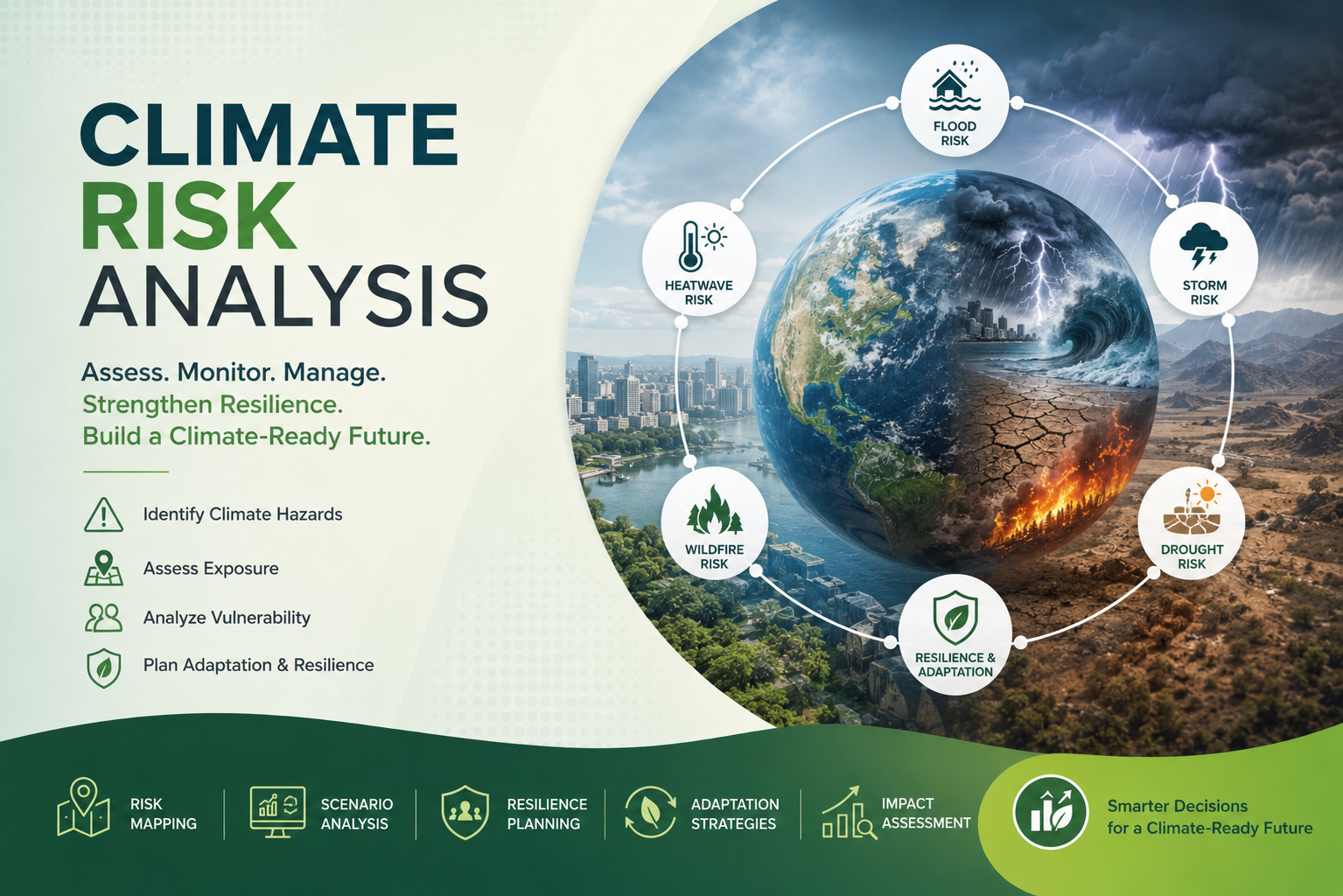
Climate Risk Analysis is the skill of identifying, assessing, and interpreting how climate change may affect organizations, assets, projects, supply chains, and communities. It focuses on risks such as extreme heat, floods, droughts, storms, sea-level rise, resource scarcity, and changing environmental conditions. In green careers, this skill helps organizations understand where they are vulnerable and how climate-related changes may influence operations, costs, safety, infrastructure, and long-term planning. This skill usually includes two main types of risk: physical risks and transition risks. Physical risks are direct impacts caused by climate events, such as damage to buildings from flooding or reduced agricultural productivity due to drought. Transition risks come from the shift toward a low-carbon economy, including new regulations, carbon pricing, changing market demand, technology changes, and investor expectations. A person with Climate Risk Analysis skills uses data, climate scenarios, maps, reports, and sector-specific indicators to evaluate these risks. Climate Risk Analysis is important for green jobs because it supports climate adaptation, ESG reporting, sustainability strategy, investment decisions, and resilience planning. Professionals with this skill can help companies reduce exposure to climate threats, prepare adaptation plans, improve infrastructure resilience, and align business strategies with climate-related regulations and net-zero goals. It is commonly used in roles such as Climate Risk Analyst, ESG Analyst, Sustainability Consultant, Environmental Planner, Resilience Officer, and Sustainable Finance Specialist.

Climate Technology, Environmental Consulting
ESG Data Analysis cover image
Technical
ESG Data Analysis
Analytical

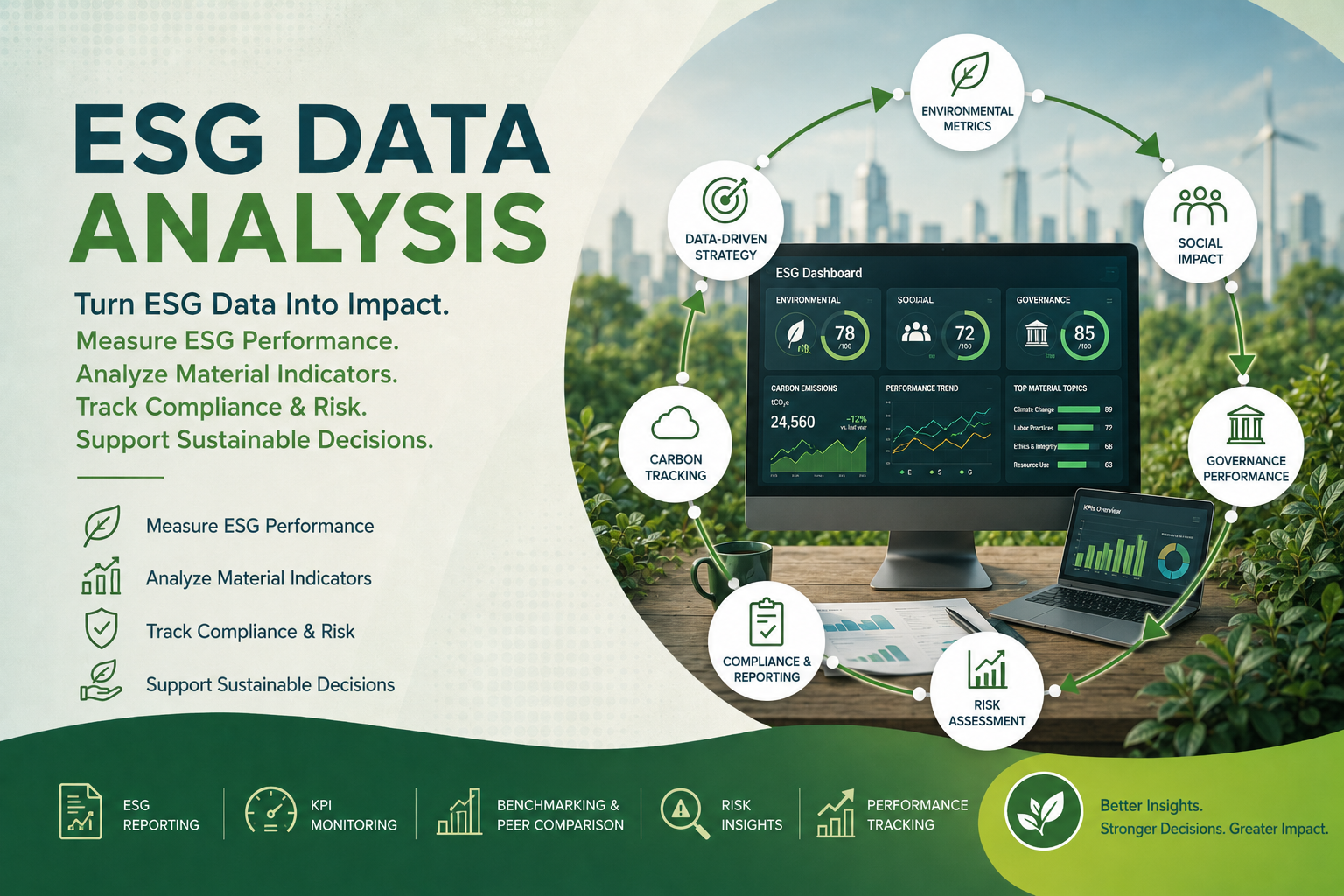
ESG Data Analysis is the skill of collecting, organizing, analyzing, and interpreting data related to a company’s Environmental, Social, and Governance performance. In green careers, this skill helps organizations understand how their activities affect the environment, people, and corporate responsibility. Environmental data may include carbon emissions, energy use, water consumption, waste generation, renewable energy use, and pollution indicators. This skill requires working with different types of sustainability data, checking data accuracy, identifying trends, and preparing clear reports or dashboards. ESG Data Analysts often use tools such as Excel, Power BI, Tableau, SQL, and sustainability reporting platforms. They may also work with frameworks and standards such as GRI, ESRS, SASB, ISSB, or the GHG Protocol to ensure that ESG information is measurable, comparable, and reliable. ESG Data Analysis is important because companies, investors, governments, and stakeholders increasingly expect transparent sustainability performance. Professionals with this skill help organizations track progress toward climate goals, improve resource efficiency, support ESG reporting, manage sustainability risks, and make better strategic decisions. It is commonly used in roles such as ESG Data Analyst, Sustainability Reporting Specialist, Carbon Analyst, Corporate Sustainability Specialist, and Sustainable Finance Analyst.

Climate Technology, Environmental Consulting
Sustainability Reporting cover image
Soft Skill
Sustainability Reporting
Analytical

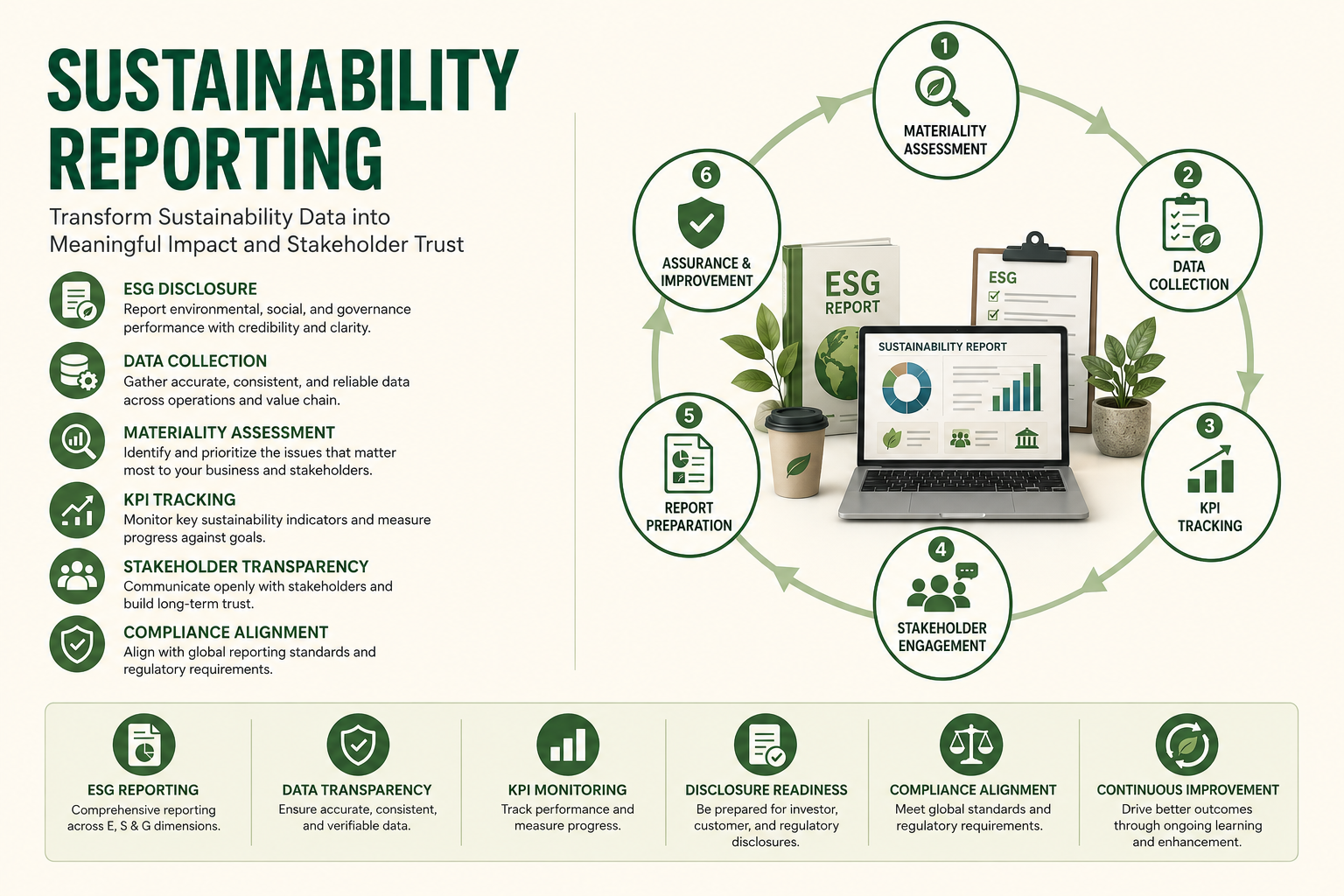
Sustainability Reporting is the skill of collecting, organizing, and presenting information about an organization’s environmental, social, and governance performance. In green careers, this skill helps companies communicate their sustainability progress clearly and transparently. Reports may include data on carbon emissions, energy use, water consumption, waste management, biodiversity impact, employee well-being, social responsibility, and governance practices. This skill requires understanding sustainability indicators, data accuracy, reporting standards, and stakeholder expectations. Professionals working in Sustainability Reporting often use frameworks such as GRI, ESRS, ISSB, SASB, or the GHG Protocol. They may collect data from different departments, check the reliability of information, prepare charts and summaries, and align the report with legal, investor, or corporate requirements. Sustainability Reporting is important because organizations are increasingly expected to prove their environmental and social impact with measurable data. Professionals with this skill support ESG reporting, climate disclosure, corporate sustainability strategy, and stakeholder communication. It is commonly used in roles such as Sustainability Reporting Specialist, ESG Analyst, Corporate Sustainability Officer, Carbon Analyst, and Sustainability Consultant.

Circular Economy, Environmental Consulting

Design

1
Circular Design cover image
Soft Skill
Circular Design
Design

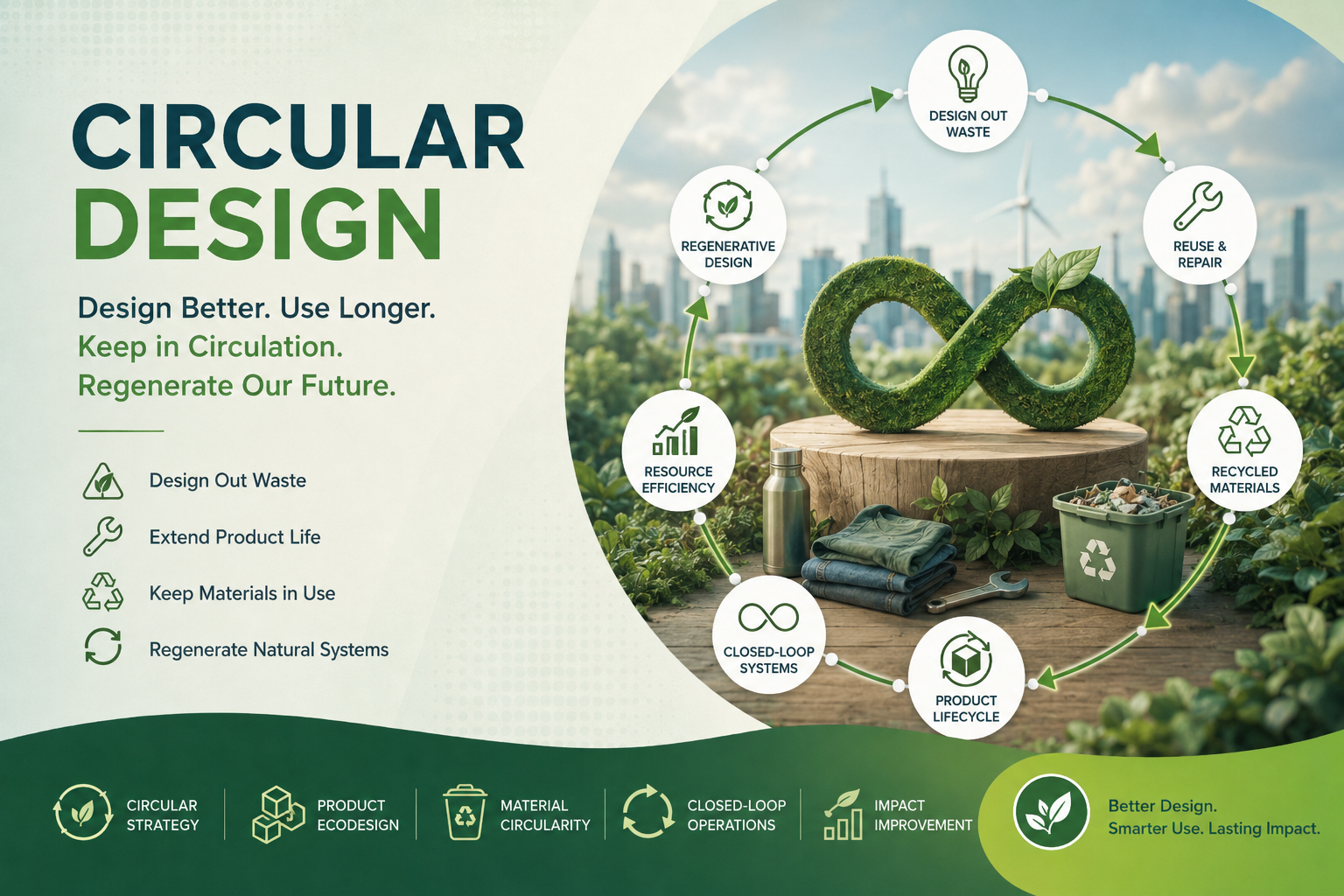
Circular Design is the practice of designing products, services, or systems from the beginning in a way that minimizes waste, uses resources efficiently, and keeps materials within the economy for as long as possible. Instead of following the traditional “take-make-dispose” model, it aims to create products that are durable, repairable, reusable, recyclable, or remanufacturable. This skill is especially important for green careers because it is directly connected to sustainable production, the low-carbon economy, and resource efficiency. Professionals with Circular Design skills analyze product life cycles, evaluate material choices, reduce packaging waste, develop recyclable design solutions, and contribute to circular economy strategies within organizations. Therefore, it is widely used in sustainable product design, green manufacturing, waste reduction, sustainable packaging, and eco-innovation. For example, a designer may develop a refillable or recyclable packaging system instead of single-use plastic packaging. A product engineer may design an electronic device that can be easily disassembled and whose parts can be reused. A sustainability specialist may analyze company products through a life-cycle approach and recommend alternatives that require fewer raw materials, less energy, and generate less waste.

Circular Economy

Management

1
Green Project Management cover image
Soft Skill
Green Project Management
Management

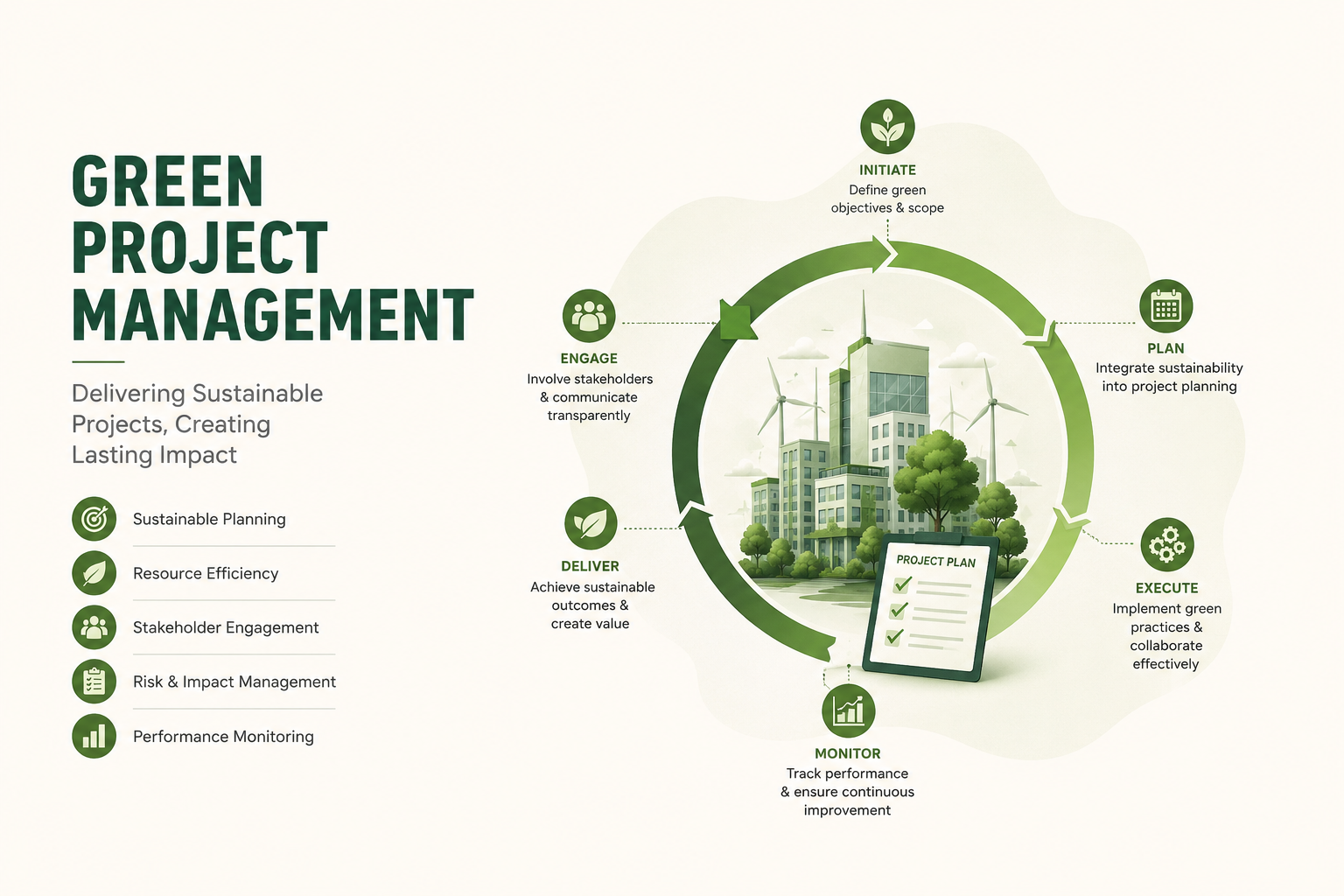
Green Project Management is the skill of planning, organizing, and managing projects in a way that reduces environmental impact and supports sustainability goals. It applies traditional project management methods to green objectives such as carbon reduction, resource efficiency, waste minimization, renewable energy use, sustainable procurement, and environmental compliance. In green careers, this skill helps ensure that sustainability is not treated as an extra activity, but as a core part of project planning and delivery. This skill involves defining sustainability targets, identifying environmental risks, managing budgets and timelines, coordinating stakeholders, and monitoring measurable green outcomes. A Green Project Manager may work with tools such as project plans, risk registers, ESG indicators, carbon tracking sheets, lifecycle assessments, and sustainability performance dashboards. The role also requires communication skills, because green projects often involve engineers, suppliers, consultants, public institutions, community groups, and senior management. Green Project Management is important because many organizations are implementing sustainability projects but need structured management to make them effective and measurable. Professionals with this skill can manage projects such as energy efficiency upgrades, renewable energy installations, waste reduction programs, green building projects, sustainable transportation initiatives, and climate adaptation plans. It is commonly used in roles such as Green Project Manager, Sustainability Project Coordinator, ESG Program Manager, Environmental Consultant, and Climate Action Project Lead.

Green Construction, Renewable Energy

Strategic

1
Waste Reduction Planning cover image
Soft Skill
Waste Reduction Planning
Strategic

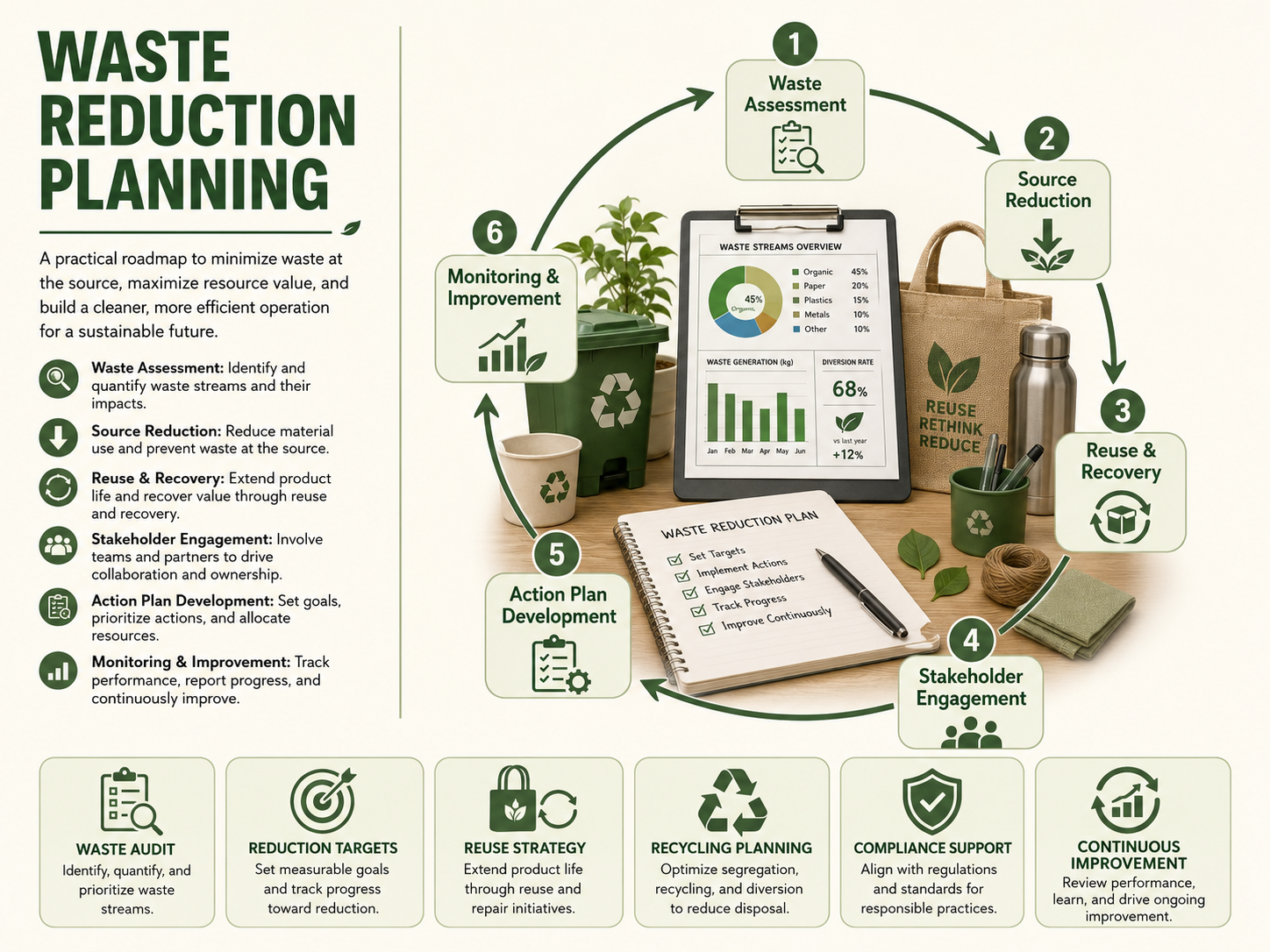
Waste Reduction Planning is the skill of designing strategies to reduce the amount of waste produced by an organization, project, facility, or community. It focuses on preventing waste before it is created, improving reuse and recycling systems, and supporting more efficient use of materials. In green careers, this skill is important because waste reduction helps lower environmental impact, reduce landfill use, save resources, and decrease carbon emissions linked to production and disposal. This skill involves analyzing waste streams, identifying major sources of waste, setting measurable reduction targets, and developing practical action plans. A person with Waste Reduction Planning skills may review purchasing habits, packaging materials, production processes, office practices, food waste, recycling systems, and disposal records. Common methods include waste audits, material flow analysis, circular economy strategies, employee awareness programs, supplier engagement, and performance tracking. Waste Reduction Planning is valuable for organizations that want to improve sustainability performance and move toward zero-waste or circular economy goals. Professionals with this skill can work in roles such as Waste Reduction Planner, Sustainability Coordinator, Circular Economy Specialist, Environmental Consultant, Facilities Sustainability Officer, and Green Operations Manager. It is commonly used in sectors such as corporate sustainability, manufacturing, education, municipalities, retail, hospitality, and environmental management.

Circular Economy, Waste Management

Technical

3
Energy Auditing cover image
Technical
Energy Auditing
Technical

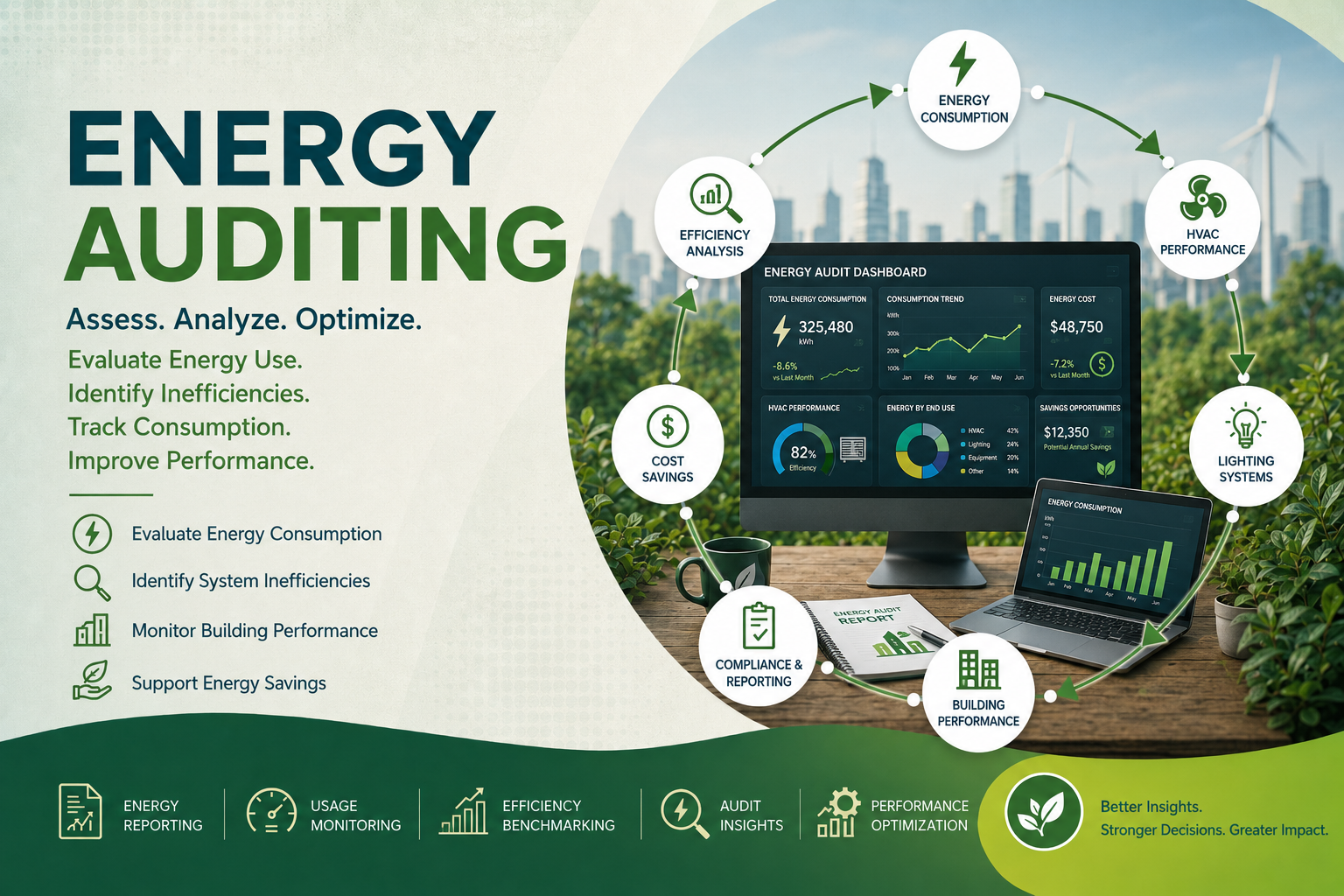
Energy Auditing is the skill of evaluating how a building, facility, or organization uses energy and identifying opportunities to reduce energy consumption, costs, and carbon emissions. It is directly related to green careers because energy efficiency is one of the most practical ways to support climate action and sustainable operations. Energy audits usually examine electricity use, heating and cooling systems, lighting, insulation, equipment performance, and operational habits. This skill involves collecting energy data, reviewing utility bills, inspecting building systems, measuring energy performance, and identifying inefficiencies. An Energy Auditor may use tools such as energy meters, thermal cameras, building management systems, Excel, and energy modeling software. The audit process often results in a report that includes recommended improvements, estimated energy savings, payback periods, and possible carbon reduction impacts. Energy Auditing is important in green jobs because it helps organizations lower emissions, reduce operating costs, improve building performance, and meet sustainability or net-zero targets. Professionals with this skill can work in roles such as Energy Auditor, Building Performance Analyst, Sustainability Consultant, Energy Manager, Green Building Coordinator, and Environmental Consultant. It is especially valuable in sectors such as green construction, energy efficiency, facility management, and corporate sustainability.

Green Construction, Renewable Energy
Environmental Impact Assessment cover image
Technical
Environmental Impact Assessment
Technical

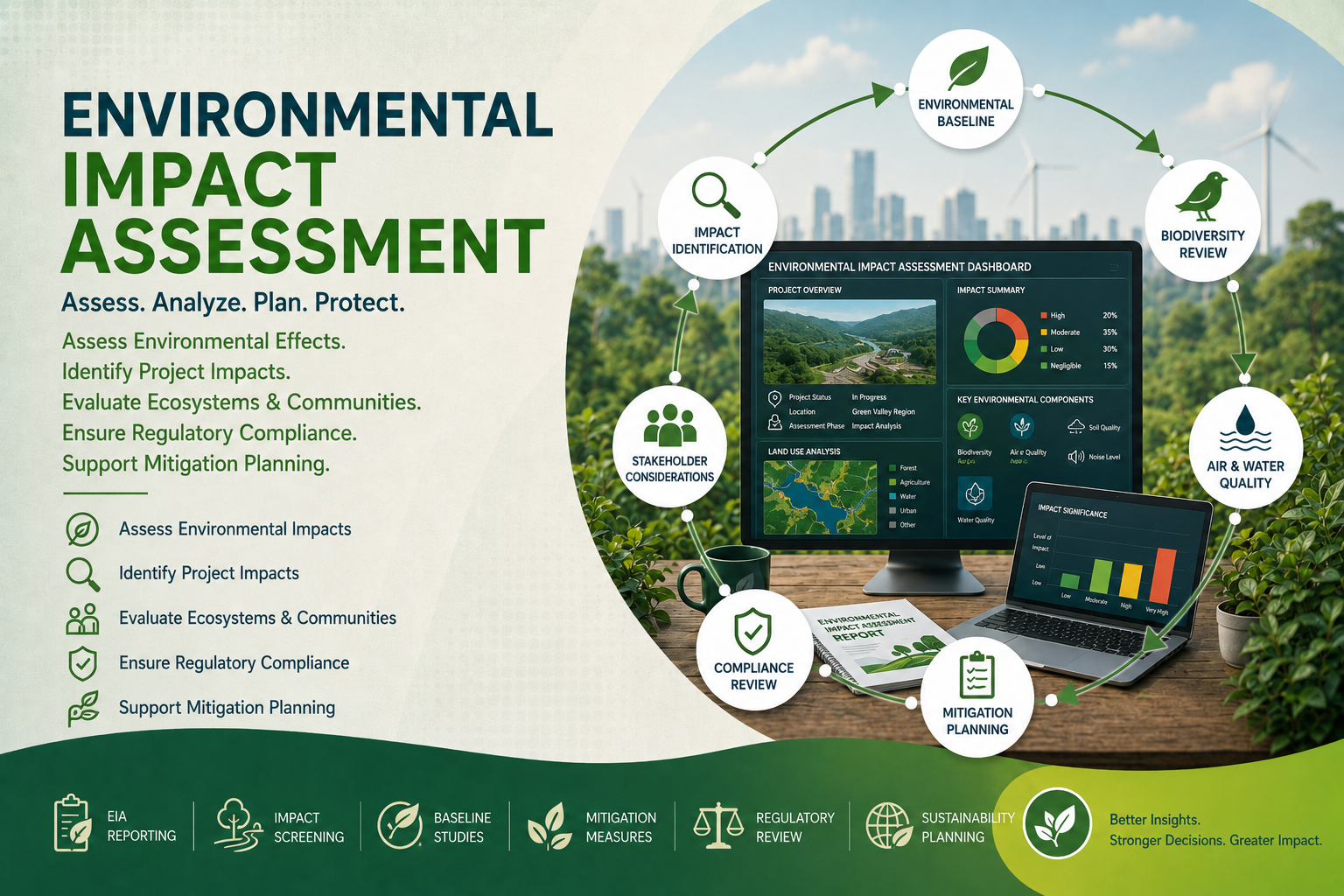
Environmental Impact Assessment (EIA) is the skill of evaluating the possible environmental effects of a proposed project, plan, or development before it is implemented. It helps identify how activities may affect air quality, water resources, soil, biodiversity, ecosystems, landscapes, local communities, and natural resources. In green careers, this skill is essential because it supports environmentally responsible planning and helps prevent or reduce negative impacts. This skill involves collecting environmental data, reviewing project details, analyzing potential risks, and proposing mitigation measures. An Environmental Impact Assessment may include field surveys, stakeholder consultation, regulatory review, mapping, biodiversity assessment, pollution analysis, and technical reporting. Professionals working in this area often use tools such as GIS, environmental monitoring equipment, impact matrices, and sustainability assessment frameworks. Environmental Impact Assessment is important for sustainable development because it ensures that projects are designed and managed with environmental protection in mind. It is commonly used in sectors such as infrastructure, construction, energy, transportation, urban planning, mining, and environmental consulting. Professionals with this skill can work as Environmental Impact Assessment Specialists, Environmental Consultants, Sustainability Officers, Environmental Planners, or Compliance Officers.

Environmental Consulting
Solar PV Installation cover image
Technical
Solar PV Installation
Technical

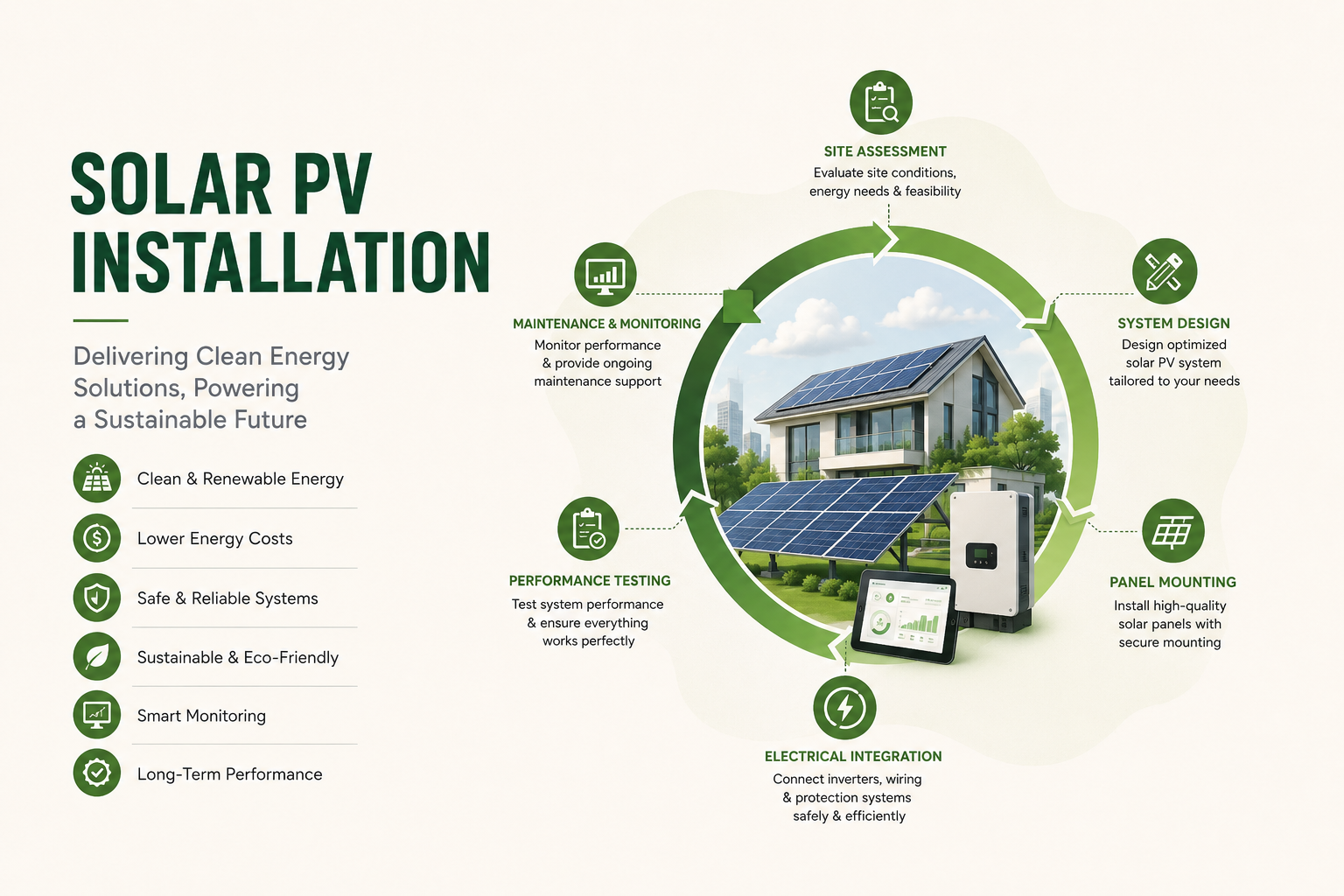
Solar PV Installation is the skill of installing, connecting, testing, and maintaining solar photovoltaic systems that convert sunlight into electricity. It is directly related to green careers because solar energy is one of the most important renewable energy technologies used to reduce fossil fuel dependency and carbon emissions. This skill is commonly applied in residential rooftops, commercial buildings, solar farms, and off-grid energy systems. This skill includes understanding solar panels, inverters, mounting systems, electrical wiring, safety procedures, site assessment, and system performance testing. A person with Solar PV Installation skills should know how to read installation plans, position panels for maximum sunlight exposure, connect system components correctly, and follow electrical and workplace safety standards. Basic knowledge of renewable energy systems, tools, measurements, and troubleshooting is also important. Solar PV Installation is valuable in green jobs because the demand for clean energy infrastructure is increasing globally. Professionals with this skill can work as Solar PV Installers, Renewable Energy Technicians, Solar Site Supervisors, PV System Designers, or Energy Efficiency Technicians. It supports careers in renewable energy, green construction, sustainable infrastructure, and climate action.

Renewable Energy