About this skill
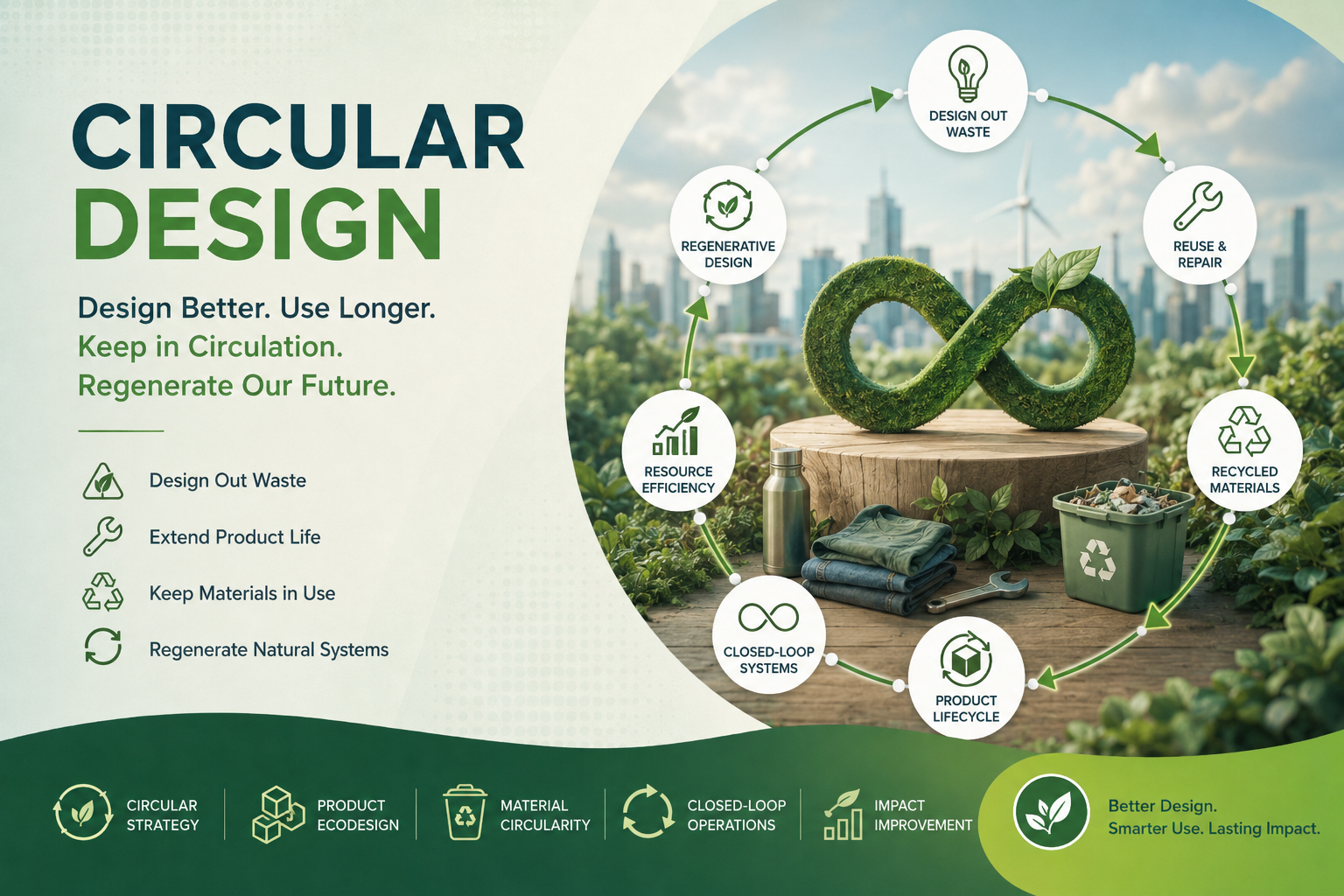
Circular Design is the practice of designing products, services, or systems from the beginning in a way that minimizes waste, uses resources efficiently, and keeps materials within the economy for as long as possible. Instead of following the traditional “take-make-dispose” model, it aims to create products that are durable, repairable, reusable, recyclable, or remanufacturable. This skill is especially important for green careers because it is directly connected to sustainable production, the low-carbon economy, and resource efficiency. Professionals with Circular Design skills analyze product life cycles, evaluate material choices, reduce packaging waste, develop recyclable design solutions, and contribute to circular economy strategies within organizations. Therefore, it is widely used in sustainable product design, green manufacturing, waste reduction, sustainable packaging, and eco-innovation. For example, a designer may develop a refillable or recyclable packaging system instead of single-use plastic packaging. A product engineer may design an electronic device that can be easily disassembled and whose parts can be reused. A sustainability specialist may analyze company products through a life-cycle approach and recommend alternatives that require fewer raw materials, less energy, and generate less waste.