About this skill
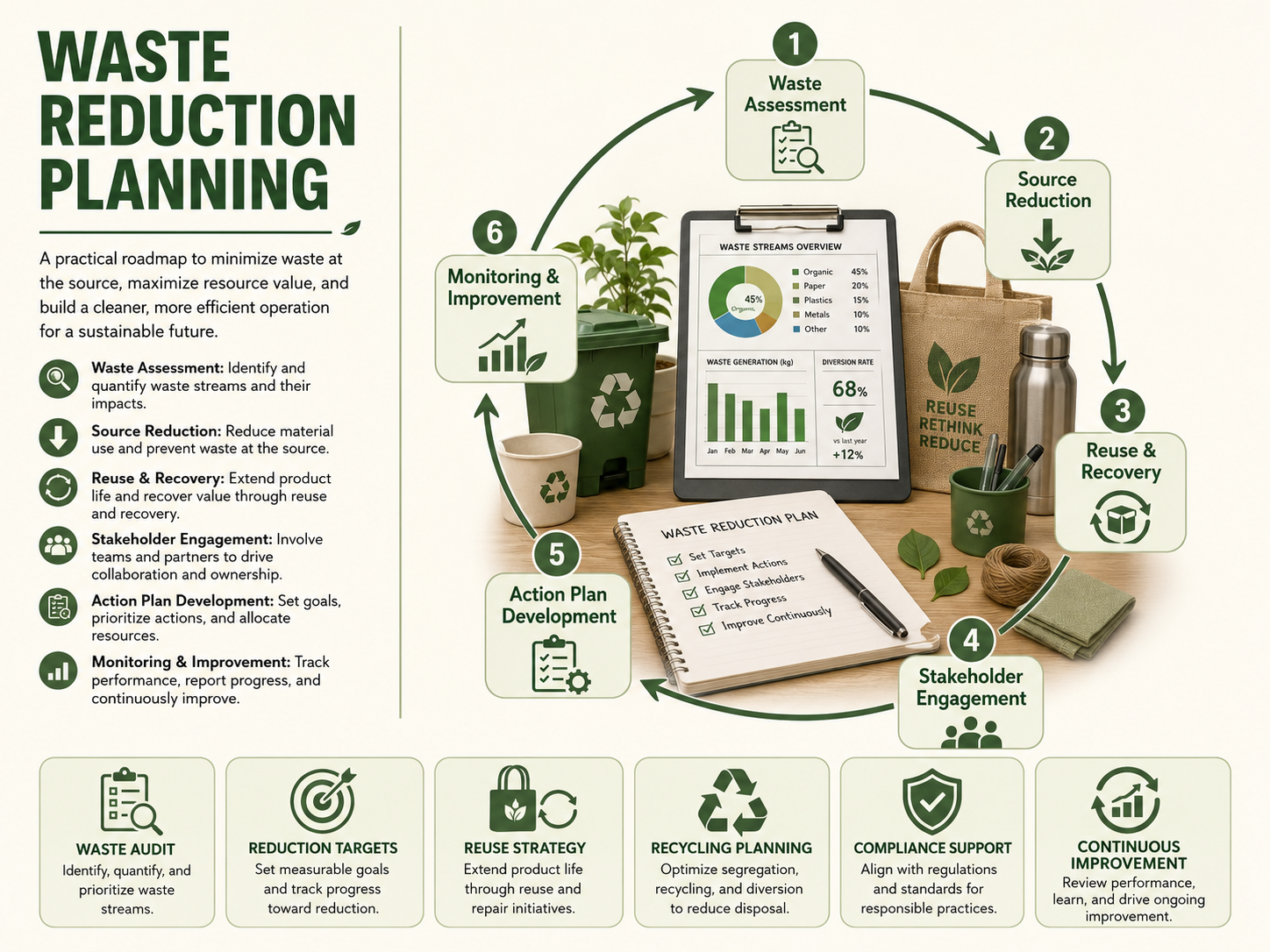
Waste Reduction Planning is the skill of designing strategies to reduce the amount of waste produced by an organization, project, facility, or community. It focuses on preventing waste before it is created, improving reuse and recycling systems, and supporting more efficient use of materials. In green careers, this skill is important because waste reduction helps lower environmental impact, reduce landfill use, save resources, and decrease carbon emissions linked to production and disposal. This skill involves analyzing waste streams, identifying major sources of waste, setting measurable reduction targets, and developing practical action plans. A person with Waste Reduction Planning skills may review purchasing habits, packaging materials, production processes, office practices, food waste, recycling systems, and disposal records. Common methods include waste audits, material flow analysis, circular economy strategies, employee awareness programs, supplier engagement, and performance tracking. Waste Reduction Planning is valuable for organizations that want to improve sustainability performance and move toward zero-waste or circular economy goals. Professionals with this skill can work in roles such as Waste Reduction Planner, Sustainability Coordinator, Circular Economy Specialist, Environmental Consultant, Facilities Sustainability Officer, and Green Operations Manager. It is commonly used in sectors such as corporate sustainability, manufacturing, education, municipalities, retail, hospitality, and environmental management.